PHFI has set up Centres of Excellence to raise awareness and strengthen research, training and education in the high priority area of public health in India. These centres are:
Centre for Chronic Conditions & Injuries (CCCI): Comprising Centre for Mental Health (CMH), South Asia Network for Chronic disease (SANCD) and Centre for Chronic Disease Control (CCDC), focusing on chronic conditions.
Centre for Environmental Health (CEH): A joint initiative of the Public Health Foundation of India and the Tata Institute of Social Sciences (Mumbai) focusing on Environmental Health.
Injury Prevention Research Centre: The Injury Prevention Research Centre focuses on reducing avoidable deaths and disabilities from injuries by connecting research, education, and practice to build safer communities.
ICMR-Collaborating Centre of Excellence (ICMR-CCoE):Indian Council of Medical Research (ICMR) announced the list of ICMR Collaborating Centre of Excellence (ICMR-CCoE) and the Principal Investigators on 18th November 2025 against the call titled “Request for Expression of Interest for ICMR Collaborating Centre of Excellence (ICMR-CCoE) 2024”. PHFI has been recognized as an ICMR Collaborating Centre of Excellence (ICMR-CCoE) for five years.
JSW Centre for Climate Change and Health:JSW Foundation and the Public Health Foundation of India (PHFI) have partnered to establish the JSW Centre for Climate Change and Health (JSW CCCH) at the PHFI Headquarters in Delhi NCR.
PHFI Center for Developmental and Lifecourse Research, Bengaluru:This center deepens our commitment to evidence-based health policy and implementation in India, aligned with the principles of the Developmental Origins of Health and Disease. The center's mission statement, “Exploring origins, enhancing futures," encapsulates its focus areas:
Transform our understanding of how early-life factors - biological, behavioral, and psychosocial - shape health trajectories across the life-course and across generations; and
Design contextualized and innovative interventions, policies, and practices that promote healthy aging, longevity, and therealization of every individual's full physical, mental, and social potential.
In addition to areas mentioned above, PHFI plans to launch CoEs in the areas of:
Emerging and other Communicable Diseases
Public Health Nutrition
Health Systems and Policy
Maternal and Child Health
Tribal Health
Ramalingaswami Centre on Equity & Social Determinants of Health
The Ramalingaswami Centre on Equity & Social Determinants of Health (“Centre”) was set up in Bangalore in 2015, as a Centre of Excellence at the Public Health Foundation of India (PHFI). Since then, it has become a go-to place for training, research and knowledge translation on gender and intersectionality in health systems and policy.
The team at the Centre has an excellent track record of in-depth grounded research straddling different methodologies.
The Centre has also engaged with key national and international health policy bodies (Mission Steering Group of the NRHM, governing board of the NHSRC, Scientific and Technical Advisory Group and Gender and Rights Advisory Panel of WHO’s RHR / HRP department and more). Over the years, the Centre has built up collaborative partnerships with institutions and universities globally, and within India – National Institute of Mental Health and Neuro Sciences (NIMHANS), Indian Institute of Public Health, Shillong, United Nations University – International Institute of Global Health (UNU-IIGH), University of Toronto’s Centre for Global Child Health, Federal University of Pelotas’ International Centre for Equity in Health, University of Western Cape, George Washington University’s Milkin School of Public Health – and its members are affiliated to networks like Health Equity Network India, CommonHealth, etc.
Our funders have included WHO’s Alliance for Health Policy and Systems Research, WHO’s Department of RHR/HRP, UNFPA, UNU-IIGH, the Bill and Melinda Gates Foundation, World Bank, and Nilekani Philanthropies.
Over the years, its members have:
Challenged existing conceptual frameworks in maternal health.
Developed new methodological approaches to verbal autopsies and intersectionality-focused analyses.
Linked key health system factors to gender dynamics to better understand the drivers of maternal mortality and respectful maternity care.
Explored the role of power in health systems.
Developed equity-oriented strategies to engage diverse health system stakeholders.
Taken an intersectionality lens to public policy.
Mission
The mission of the Ramalingaswami Centre on Equity and Social Determinants of Health is to contribute to efforts to improve the health of India’s population by reducing health inequalities, focusing particularly on socioeconomically disadvantaged groups.
Aims
The Centre’s aims are four-fold:
To conduct cutting-edge, grounded, in-depth primary research and reviews on equity and the social determinants of health, with a strong focus on gender and its intersections with other sources of socioeconomic power.
To develop teaching materials grounded in field experiences and research on socio-economic inequality to strengthen public health training in India.
To foster linkages between researchers, programme implementers, and policymakers to support evidence-based policy development.
To create knowledge products that promote active engagement with public health concerns by a wide range of stakeholders.
Workstreams
Research
Theme 1 – Maternal Safety and Rights
Disrespect and abuse (D&A) in obstetric care are recognised as a widespread and systemic problem. Quantitative, qualitative and intervention research aimed at understanding and addressing it better has pointed to the root causes of D&A within socio-economic inequality or within power hierarchies in health care provision. But there has been relatively little attempt to identify and document the actual mechanisms through which power relations translate into health care practices or behaviours. Such an effort is essential to appreciate why D&A in maternal care is so widespread, and how the problem might be addressed effectively.
The Centre has conducted both qualitative and quantitative research in southern India to better understand the phenomena of disrespectful and abusive obstetric care and family planning services.
Theme 2 – Women’s Health & Wellbeing
The Centre is engaged in formative research on women’s health and well-being with partners including the University of Toronto’s Centre for Global Child Health, UNFPA, the Federal University of Pelotas’ International Centre for Equity in Health, and George Washington University’s Milkin School of Public Health. This work combines a life course approach with a gender and intersectionality lens and focuses on conceptual advancement, metrics, and dashboards to track progress.
Theme 3 – Urban Health Challenges
The Centre conducts formative research into growing health challenges in urban India, with a specific focus on vulnerabilities of marginal groups, using an intersectional lens. It seeks to address gaps in information on urban health, recognising the diversity of urban centres, governance structures and multidimensional urban poverty.
Maternal Clinical Assessment Tool (M-CAT): A proof-of-concept study leveraging digital technology to improve the quality of antepartum and postpartum clinical assessments.
Cross-sectional community survey: designed to:
Understand rural women’s perceptions and experience of institutional obstetric care, including the strategies used to negotiate better care.
Measure and explain differences in perceptions of institutional obstetric care by social location of the woman, type of institution, and stage of the village’s transition to institutional birth.
Qualitative research with healthcare providers: exploring the causes of obstetric care‑linked D&A in healthcare institutions, especially the role of professional training and work cultures.
Scoping review: organisational conditions and their impact on maternity providers and care in LMICs, with implications for Respectful Maternity Care.
Training / Teaching / Mentoring
The Centre successfully ran a fellowship programme aimed at strengthening gender equity and intersectionality in health policy and systems research, selected as an RMI by WHO’s Alliance for Health Policy and Systems Research, and run in collaboration with UNU‑IIGH.
This resulted in a high-quality modular online course emphasising case-based learning, ready to be rolled out in multiple settings.
The Centre is planning several short courses on Research Methodology and Patient‑Centred Communication for Health Professionals, among others.
Policy Engagement
The Centre engages in policy development at three levels: local/state, national and global.
At the state level, collaborating with the World Bank to explore how the Government of Tamil Nadu can address challenges to adolescents’ sexual, reproductive, nutritional, and mental health.
At the national level, researching the functioning of publicly funded health insurance schemes, including questions of inclusion, exclusion, and sensitivity to power relations and distributional challenges.
Globally, working with UNU‑IIGH, the University of the Western Cape and WHO‑SEARO on ‘Promising Practices in Integrating Gender into Government Health Programs’ across Africa, Southeast Asia and South Asia.
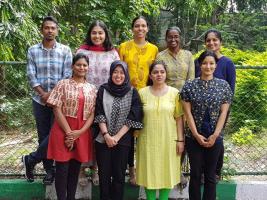
THE TEAM
Prof. Shreelata Rao Seshadri
Professor and Director
Prof. Gita Sen
Distinguished Professor and Senior Advisor
Dr. Aditi Iyer
Deputy Director
Dr. Abha S Rao
Research Scientist and Assistant Professor
Dr. Anuradha Sreevathsa
Consultant
Ms. Ketoki Basu
Consultant - Finance
Dr. Radhika Kaulgud
Manager - Operations
Ms. Arunima Ghosal
Research Associate
Dr. Sophia Thomas
Research Associate
Ms. Meher Suri
Consultant
Dr. Madhumita Bango
Research Scientist
Ms. Shanthi Suraj Shetty
Administrative & Finance Officer
Dr. Keerthana Anilkumar
Consultant
Dr. Prateek Rathi
Consultant
Dr. Gayatri Menon
Consultant
Contact us
Public Health Foundation of India Epidemic Diseases Hospital Compound Old Madras Road Indiranagar Bangalore – 560038
Phone: +080-29710403
ABOUT DR. RAMALINGASWAMI
Born on August 8, 1921, Professor Vulimiri Ramalingaswami’s illustrious medical career spanned over half an extremely eventful century. Starting as a Clinical Research Officer at the Nutrition Research Laboratory in Coonoor in 1947, Professor Ramalingaswami went on to become the Director of the All-India Institute of Medical Sciences (1969-79) and the Director General of the Indian Council of Medical Research (1979-1986). He continued to be a National Research Professor until his death on May 28, 2001. Along the way, he garnered several honours, including the Founding Fellow of the Indian Academy of Medical Sciences; Fellow, Royal College of Physicians; Honorary Fellow, American College of Physicians; and Fellow, Royal Society of London, among others. He received numerous awards, including the Padma Shri and Padma Bhushan.
Professor Ramalingaswami’s contributions to medical research are well-documented, in areas ranging from anaemia, protein-energy malnutrition and nutritional pathologies to liver disease, cardiovascular disease and iodine deficiency disorders. Over time, his interest in and understanding of the social determinants of health increasingly informed his research and writing. In ‘Anatomy of Hunger’, a conference paper he wrote in 1976, he speaks of the ‘chronic or endemic hunger and malnutrition which are woven into the complex social texture of under-development’. His views were profoundly impacted by his visit in 1967 to famine-torn Bihar as well as districts of Orissa; and later in the Bangladeshi refugee camps in 1971-72. Later he was involved in mobilising the response to the Bhopal gas tragedy and the outbreak of bubonic plague in Maharashtra and Gujarat in 1994. These experiences built his understanding of the genesis of disease and the need of a strong and resilient health system to mitigate the worst impacts of health disasters.
Professor Ramalingaswami was truly a leader in his field, who in turn mentored and groomed several others in the next generation. His spirit of lively curiosity, commitment to excellence and scholarship, accompanied by a deep awareness of social inequalities and the need to redress them, guides the Ramalingaswami Centre on Equity and Social Determinants of Health.
The Centre for Chronic Conditions and Injuries (CCCI)
The Centre for Chronic Conditions and Injuries (CCCI) at the Public Health Foundation of India is an umbrella platform comprising Centre for Mental Health (CMH), South Asia Network for Chronic disease (SANCD) and Centre for Chronic Disease Control (CCDC) with the mandate to generate world-class knowledge that can impact policy and practice aimed at reducing the burden of chronic conditions in India and beyond.
At CCCI, our unique approach to chronic conditions is to put the affected individual and the family at the heart of science, practice and policy. Our vision is to carry out cutting-edge science to understand the dynamics, determinants and dimensions of chronic conditions and to develop, evaluate and help scale up evidence-based solutions.
Chronic conditions are a diverse group of diseases, ranging from cardiovascular diseases and diabetes to mental and neurological disorders. Collectively they pose the biggest health challenge of the 21st century, for both rich and poor countries alike. In India, rapid social and economic changes are leaving people at greater risk of developing a range of highly debilitating and life-threatening chronic conditions. Chronic conditions are now responsible for the majority of deaths in India, and are the biggest source of disability. Their under-recognised impact threatens to jeopardise economic development and is already preventing millions of families from escaping poverty.
The scale of the chronic disease crisis over the coming years will be determined by the decisions and actions that policy-makers take now. Timely action could provide huge benefits by reducing suffering and raising economic productivity. Although some progress has already been made, what is urgently needed is a coherent, strategic approach based on the existing knowledge of the health needs of the population, evidence-based practice and regular evaluation of the impact achieved. To tackle the challenge of chronic conditions effectively, India needs better coordination of existing efforts, integration of relevant national programmes, partnerships between government and other sectors, and an effective national surveillance system and research strategy.
Centre of Environmental Health
Welcome to the PHFI Centre for Environmental Health (CEH), a centre for knowledge creation and dissemination regarding the interdisciplinary field of environmental health. The Centre was launched in May 2016 by the Honourable Union Minister, Ministry of Health and Family Welfare, Shri J. P. Nadda. It was set up through an initial seed grant from Tata Sons and Tata Consultancy Services Ltd.
Embedded in the larger field of public health, environmental health refers to aspects of human health and diseases where a pivotal role is played by biological, chemical, physical, social and psychosocial factors in the environment.
Vision
PHFI Centre for Environmental Health has a vision to strengthen India’s capabilities in the evolving field of environmental health across the country and in India’s unique position in the international environmental and policy landscape.
The Centre envisions building climate-resilient health systems in India that can respond to, cope with, recover from and adapt to climate-related shocks and stress, to bring sustained improvements in populations health, despite an unstable climate.
Mission
The mission of the Centre is to be a leading centre on environmental health on research, teaching, training and capacity building, community outreach, and providing evidence-informed policy guidance to all relevant stakeholders.
The JSW Centre for Climate Change and Health (JSW CCCH), established at the Public Health Foundation of India, with the support of the JSW Foundation, serves as an integrated response to multidimensional impacts of climate change on human health. The Centre, launched in July 2025, plays an important role in accelerating Government of India’s commitment to address climate change impact on human health as reflected in the National Plan for Climate Change & Human Health and other relevant policies.
Operating as a multidisciplinary hub, the Centre supports India’s national health plans by prioritizing high-impact climate factors, vulnerable populations, and building strategic partnerships. Its work spans climate science, health science, social science, and humanities - to study how climate change impacts the health of both planet and people, through a One-Health and Planetary Health framework, thus focusing on building resilient health systems through adaptation and policy, with a dedicated focus on equity and social determinants.
Under the aegis of the Centre, the broad Scope of Work includes
Capacity Strengthening: Coordination and delivery of targeted programs for a wide range of stakeholders, ranging from policy-makers, program manager to communities.
Evidence Generation: Documenting the extent of the problem, design-test-scale innovative solutions to minimize burden and risks.
Knowledge Exchange: Preparation of resource materials and organization of webinars, workshops & technical discourse, roundtable conversations, white-papers and policy papers for advocacy.
Public Awareness: Amplification of community awareness through social-media campaigns, prioritize youth and youth ambassadors for spreading awareness.
Forging Collaborations: Partnerships with domestic and international knowledge partners.
PHFI Center for Developmental and Lifecourse Research
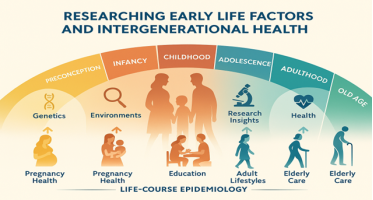
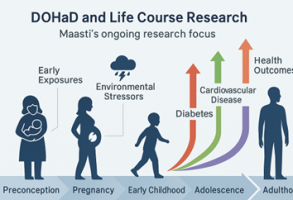
The Centre for Developmental and Life Course Research at PHFI is committed to advancing our understanding of how early-life experiences - including biological, behavioural, environmental and psychosocial factors - shape health trajectories across the lifespan and across generations.
Based in Bengaluru, an urban hub experiencing a growing burden of chronic diseases linked to rapid urbanisation and lifestyle shifts driven by IT-driven economic opportunities, the Centre’s research will address these emerging public health challenges using the Developmental Origins of Health and Disease (DoHaD) lens.
By examining risk factors from adolescence through preconception and pregnancy, we aim to design and test strategies that promote healthy aging, prevent chronic conditions, and reverse the current adverse health trends in Karnataka - a state with some of the poorest maternal and child health outcomes in Southern India.
The Centre is committed to fostering a healthier future for individuals and communities through translational research, collaborative partnerships, and capacity-building in life course epidemiology.
Vision
Healthy individuals achieving their full potential - physically, mentally and socially
Mission
Exploring origins, enhancing futures
Our mission is to advance understanding of the Developmental Origins of Health and Disease and enhance health across the life course by designing interventions, policies, and practices and building capacity to improve maternal, child, adolescent, and adult health, prevent chronic diseases, and promote healthy aging.
Aims and Objectives
Centre of Excellence: We aim to establish the Centre as a regional and global hub for lifecourse epidemiology research and education by generating high-quality research, developing innovative methods, and building impactful collaborations to shape public health thinking and practice across generations.
Research Across Generations: We will conduct in-depth, longitudinal research to understand how early-life exposures—beginning in adolescence and preconception—impact health outcomes across the lifespan. Our studies will inform specific pathways that link early-life environments to healthy ageing and chronic disease prevention
Evidence-Based Public Health Policies and Practices: We are committed to translating scientific evidence into actionable public health interventions, policies and practices that promote health, prevent chronic conditions, and improve health outcomes at key life stages.
Key Objectives
Multidisciplinary Research: Conduct interdisciplinary studies that integrate biological, environmental, behavioural, and social determinants to understand health from adolescence and the prenatal stage to old age.
Education and Training: Offer academic programs, workshops, and mentorship opportunities to equip the next generation of public health professionals with a life-course perspective.
Community Engagement: Build strong partnerships with local and global communities to co-create solutions, disseminate research findings, and strengthen community-based health promotion.
Sustainable Funding and Partnerships: Secure long-term funding and forge collaborations with national and international institutions to support research, training, and policy advocacy.
Innovative Interventions: Design, implement, and evaluate novel, culturally relevant interventions targeting critical life stages—particularly adolescence, pregnancy, and childhood.
Global Leadership and Policy Influence: Position the Centre as a thought leader in public health, contributing to global policy dialogues and influencing health agendas through rigorous evidence and strategic advocacy.
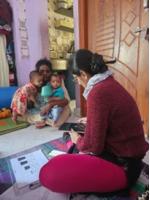
On-the-ground assessment by our field worker | Image by PHFI
Our Current Research Focus:
Investigating the transgenerational effects of maternal glucose levels and psychosocial environmental factors on childhood obesity, neurodevelopment, and mental health.
Exploring how the maternal and child metabolome and gut microbiome influences health trajectories across the life-course.
Assessing the impact of environmental pollutants, including air pollution, on maternal, fetal, and child health outcomes.
Examining the role of maternal and infant stress in shaping child emotional and behavioural development.
Impact
30+ Manuscripts published in high-impact, peer reviewed international journals, advancing evidence on maternal, child, and adolescent health.
The MAASTHI birth cohort was featured in theLancet Series: Small Babies, Big Risks– highlighting global estimates of prevalence and mortality for vulnerable newborns and emphasizing the need to accelerate change and improve reporting.
Provided strategic and evidence-based recommendations to the Government of Karnataka for reducing maternal mortality, drawing on evidence from a life-course epidemiology perspective
ICMR-Collaborating Centre of Excellence (ICMR-CCoE)
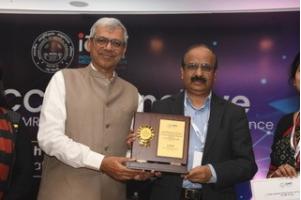
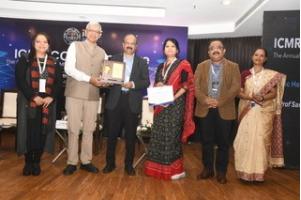
In recognition of outstanding biomedical research, ICMR designated PHFI, Delhi led by Professor Sanjay Zodpey, President PHFI as an ICMR Collaborating Centre of Excellence at ICMR Collaborating Centre of Excellence Conclave held on 7th January 2025 at India International Centre (IIC), New Delhi. Dr. Rajiv Bahl, Secretary, Department of Health Research and Director General, ICMR presided over the meeting.
Indian Council of Medical Research (ICMR) announced the list of ICMR Collaborating Centre of Excellence (ICMR-CCoE) and the Principal Investigators on 18th November 2025 against the call titled “Request for Expression of Interest for ICMR Collaborating Centre of Excellence (ICMR-CCoE) 2024 (Last date August 16, 2024)”. The list of all ICMR CCoEs is available at https://www.icmr.gov.in/icmr-collaborating-centre-of-excellence-icmr-ccoe
The primary objective of ICMR-CCoE is to enhance collaboration between ICMR, its institutes, and the designated CCoEs, as well as among the CCoEs themselves. This initiative aims to bolster the country's research capabilities, contributing to national health development through information, services, research, and training. On 7th January 2025, the ICMR organized an event at India International Centre (IIC) to felicitate the PI, research team of newly identified ICMR CCoEs and also to have a dialogue with the ICMR-CCoE selected in year 2023.
Injury Prevention Research Centre Preventing injury. Improving recovery. Reducing suffering.
We strive to reduce avoidable deaths, disabilities, and suffering due to injuries and traumatic events. Our mission is to generate evidence that informs prevention, strengthens systems, and improves the lives of individuals, families, and communities affected by injury. Through research, education, and engagement, we seek to advance understanding of both the human consequences of injury and the future challenges facing health systems and society.
Injuries are a major public health challenge. Globally, they claim more than 4.3 million lives each year and leave millions more living with disability, trauma, and long-term health consequences. Yet the burden of injury extends far beyond mortality and morbidity. Families, caregivers, and communities often experience profound emotional, social, and economic impacts following injury, disability, or sudden loss. At the same time, injuries place substantial demands on healthcare systems, rehabilitation services, social support structures, and national economies.
Low- and middle-income countries bear the greatest share of this burden, where injury prevention remains under-prioritised despite the availability of proven, cost-effective interventions. India ranks among the countries with the highest numbers of injury-related deaths and disabilities worldwide. The consequences are particularly severe because injuries disproportionately affect children, adolescents, and young adults during their most productive years of life. Preventing injuries not only saves lives but also protects families, strengthens communities, and supports economic development.
Despite the scale of the problem, important gaps remain in our understanding of both the lived experience and future consequences of injury. Policymakers and practitioners often lack timely, reliable, and actionable evidence to guide prevention efforts, improve care, support recovery, and plan for future needs. Critical questions remain about who is most at risk, how injuries affect individuals and families over time, what resources will be required to meet future healthcare demands, and which investments will have the greatest impact on reducing injury burden.
To address these challenges, the Centre's work is organised around two complementary streams. Across both streams, the Centre generates high-quality evidence, builds research capacity, and translates knowledge into policy and practice. We work across the continuum of injury prevention and response—from understanding risks and preventing injuries, to supporting recovery, strengthening systems, and informing long-term planning.
Human Impact
This stream focuses on understanding and reducing the human consequences of injury and traumatic events. We examine how injuries affect individuals, families, caregivers, and communities, with particular attention to disability, recovery, mental health, caregiving, bereavement, resilience, and quality of life. Through research and engagement, we seek to improve support systems and promote recovery and wellbeing following injury, disability, and loss.
Future Burden and System Planning
This stream focuses on anticipating future injury challenges and informing strategic decision-making. Building on advances in burden estimation and forecasting, we generate evidence on future injury trends, healthcare system demands, rehabilitation needs, economic impacts, and the potential benefits of prevention investments. Through forecasting, modelling, and policy analysis, we support governments and stakeholders to plan for a safer and healthier future.
By bringing together researchers, practitioners, policymakers, communities, and people with lived experience, we aim to advance a more comprehensive understanding of injury—one that recognises both its immediate and lasting consequences. Through this work, we seek to reduce preventable harm, improve quality of life, strengthen health systems, and contribute to safer, healthier, and more resilient communities across India.
Thematic areas of interest
suicide prevention
drowning prevention
gender-based violence
road safety
climate and disaster related injuries
trauma systems
rehabilitation
disability
mental health after injury
family impacts of injury
bereavement after sudden deaths or traumatic loss, including stillbirths and neonatal deaths
Donate to a Healthier India : Collective effort is required to
address the public health challenges we face today. Partner with
PHFI and support initiatives to strengthen public health
initiatives in India.